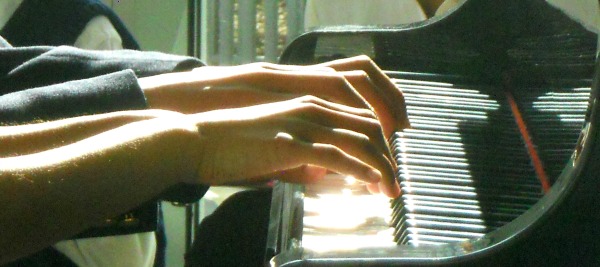
One does not have to be a musician to help their children establish a good practice routine. (Tips for Parents.)
- Establish a strategy before lessons start to keep from being worn down by children who would rather do something other than practice; they have vast stores of energy for these discussions. Some parents set a specific time to practice (e.g., while dinner is being prepared or after school before going out to play), others leave the time flexible, but don’t permit certain privileges until practice is done.
- A general practice template for an intermediate student might look like this:
- 5 minutes on scales, chords, and technique
- 10 minutes learning new notes (by doing X number of measures per day and reviewing them daily)
- 5-10 minutes polishing and reviewing older pieces
- 5-10 minutes on sight reading, aural skills, listening and moving to music
- This doesn’t all have to be done in the same sitting. Young minds need breaks in order to focus well and think first.
- NOODLING IS NOT PRACTICING!!!!!
Practicing is when the student follows the lesson assignment carefully, starting with scales or exercises, then reviews new groups or measures learned the day before, and moves on to learn more new groups or measures.
Thinking before and after playing a passage is the most important skill for students to master! Students should hear the passage in their head, think about what they have to do to play it well, and THEN play it. When finished, they should evaluate whether they did or didn’t do it as expected, and if not, figure out why.
Noodling is carelessly playing through old pieces from the beginning, usually too fast and making mistakes that aren’t corrected.
Reviewing old pieces means working on them mindfully and improving details for better performance.
The practice area should be free from distractions!!! Since pianos are often in the living room, it will help to ask siblings to go elsewhere and turn off tvs, video games and any other background noise that may be distracting. Even conversations can be distracting when students are supposed to be working on music.
An adjustable chair will help ensure that young students don’t develop drooping wrists. A footstool also helps ensure good posture and stability on the seat. If your students aren’t sitting appropriately (too low, too high, slouching, legs crossed) or the situation is otherwise cramped or uncomfortable, they might as well not practice. All they’re doing is reinforcing bad habits that will have to be unlearned at the lesson. Piano is like a sport, muscle memory based on good practice habits is the foundation for good technique.
Music should always be on the rack and not scattered around the house or in a school backpack in the bedroom (a dedicated music bag helps keep things organized). Students need to learn to find their own pieces, keep track of practice assignment sheets and bring current music and the assignment book to lessons. Young students may need reminders the first year or two to establish this habit.
The piano should be in tune and in good working order. Nobody wants to practice on an instrument that doesn’t sound good, including beginning piano students. The whole point of playing is to create lovely sound; a decent instrument that is well-maintained provides the foundation.
Parents can help the practice effort by asking students to explain their practice items for the week, asking for a 5 minute “demo” of practice on a piece, or by finding out which pieces the student likes or dislikes and why. Printed tip sheets are available for those interested.
Philip Johnston’s book “Not Until You’ve Done Your Practice” is an OUTSTANDING resource for parents and elementary age students interested in developing good practice habits. Links to a few other articles about practice and ideas about motivation and praise are included below.
The Parent’s Role in Piano Practice
Calmer, Easier, Happier Music Practice
How to Encourage a Child to Practice
 Devonshire Piano